by Bryan Bissell
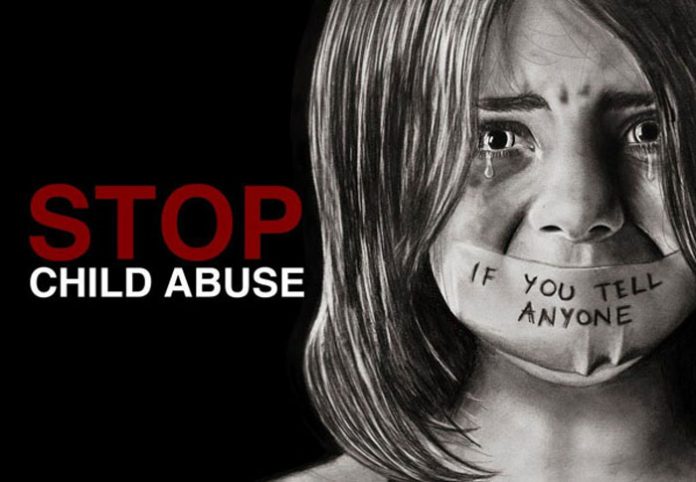
Abuse is one of the most devastating violations of the human spirit. If you have been abused, then my heart goes out to you and I am so sorry that happened to you and deeply wish it had not and that we could eradicate this evil completely. I have experienced several severe forms of abuse and betrayal myself (explained briefly later in the page in part 3). I know by personal experience the pain and agony abuse causes and the long term effects and I’ve also been involved in helping several people to escape abuse in court cases and also outside of courts. God often uses pain that happens to people to motive them to make positive changes in the society around them and prevent more evil like this from happening.
This topic of abuse may be uncomfortable to discuss, but is important to address because abuse can have very damaging or even devastating life long consequences as research on Adverse Childhood Experiences (ACEs) shows, including causing more abuse in the next generations. This site has a good overview of ACES and also a quiz to see how many aces you may have.
“10 forms of childhood trauma [physical, emotional or sexual abuse, physical or emotional neglect, mental illness, violence towards mother, divorce, substance abuse, incarcerated relative] dramatically increase the risk of 7 out of 10 of the leading causes of death in the United States…The CDC’s Adverse Childhood Experiences study shows us 10 childhood traumas permanently affects the physical, mental, social, and financial health of people who experience them. The ACEs fit in 3 categories; abuse, neglect, and household dysfunction. Each type of maltreatment you have suffered counts as 1 ACE.”
https://stopabusecampaign.org/faq-the-ace-study/adverse-childhood-experiences-study/
So even 1 case of abuse is too many as the SDA anti-abuse organizations End It Now (listed at the end) says, and we should all aim to eliminate every case we can.
To do that, we have to first identify the actual real factors/motivations behind abuse. If we don’t, the real causes will escape and continue to perpetrate more tragic abuse.
While headlines often focus on the failures within religious institutions, a deeper look at research in the USA and around the world reveals a different story: true faith is the greatest deterrent to abuse, while power, greed, atheistic/secular ideologies, Darwinism, and other forces provide powerful motivations to abuse others or eradicate moral boundaries of abuse and so fuel its fiery evil.
The reality is that while some societal influences have influenced a few Christians to commit abuses (~1.5-2% of protestant Christian leaders and ~4% of Catholic leaders), these societal influences and secular/atheist ideologies have influenced far higher percentages of non-Christians to engage in abuse in various areas of society (rates range from 10% up to 94% in secular environments).
In stark contrast, true and authentic biblical Judaism and Christianity have by far the best human rights track record of all worldviews in stopping, drastically reducing and preventing abuse as well as warning strongly against its root causes and helping people who have been victimized by abuse to recover and live valuable and happy lives. This fact is actually one strong evidence for the truths and practical value of biblical Christianity.
If you have gone through abuse, God can heal and restore and has done that for many and can do it for you too. Abuse may have been a chapter in your story, but it is not the end. As you navigate this journey, remember that God knows your name and has a plan for your restoration. This is a beautiful song about how God has helped restore several women who were tragically abused and make sure to check out the story of Joyce Meyer below and how God helped her overcome horrific abuse and use that experience to help many other women.
Watch: He Knows My Name – Francesca Battistelli
I encourage you to read this page to understand some of the REAL root causes that caused that pain and agony and then use your time and resources you have to oppose them and end as much of this evil as you can. If you have experienced abuse, I also encourage you to go to a godly and effective Christian counselor to learn the best ways to recover. There are some resource links at the end of this page that can help with that.
1. The Heart of God: A Divine Mandate Against Abuse
The Bible does not remain silent on the mistreatment of the vulnerable. God’s hatred of abuse is absolute and extremely strong in clearly condemning all forms of abuse and child abuse as one of the most heinous of all evils.
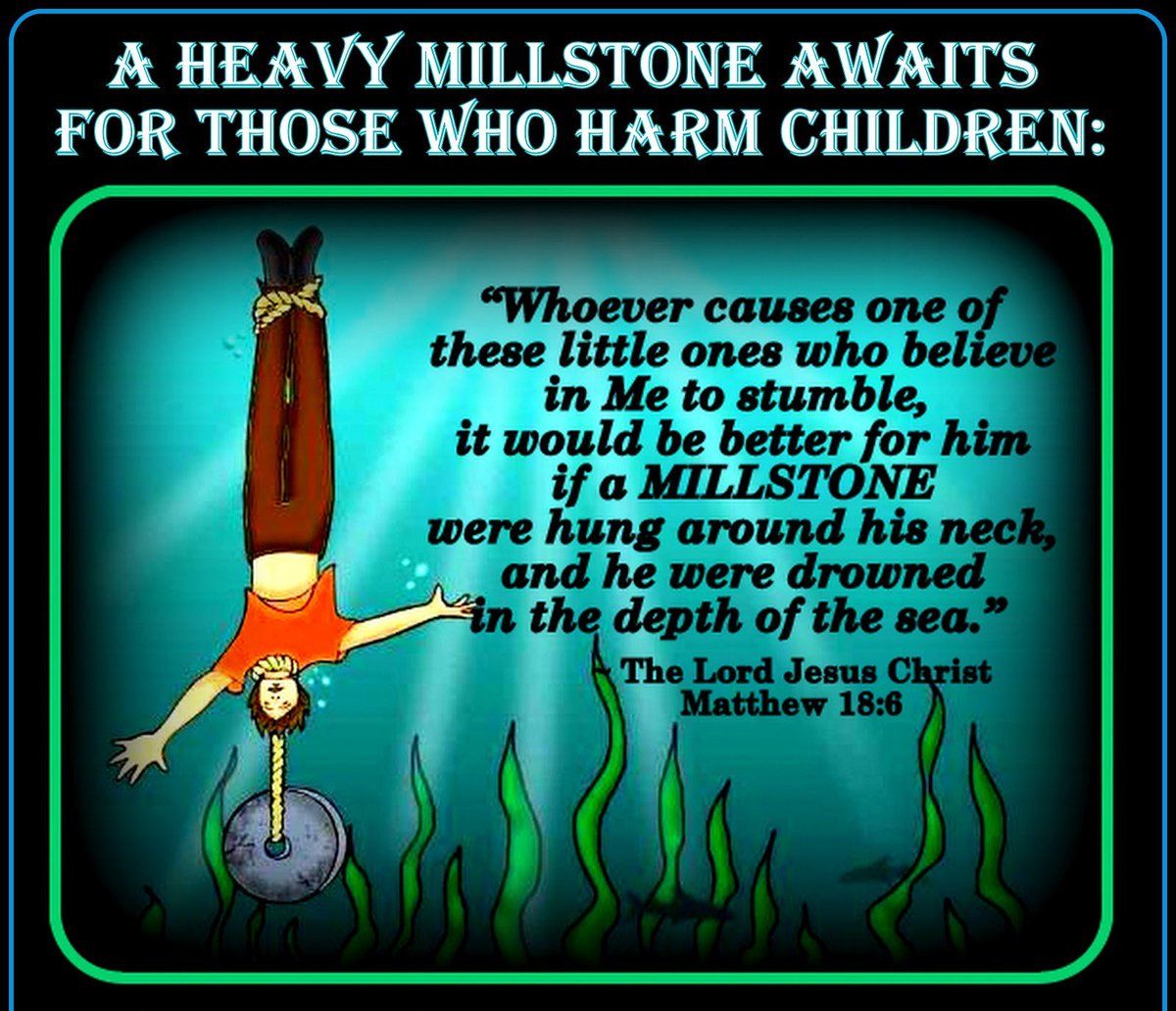
- The Millstone Warning: “But if you cause one of these little ones who trusts in me to fall into sin, it would be better for you to have a large millstone tied around your neck and be drowned in the depths of the sea.” (Matthew 18:6)
- The Command to Defend: “Give justice to the poor and the orphan; uphold the rights of the oppressed and the destitute. Rescue the poor and helpless; deliver them from the grasp of evil people.” (Psalm 82:3–4)
- The Warning Against Greed: The Bible identifies greed as the root of all evil (1 Tim 6:10) and warns that in the last days, people will be “lovers of self, lovers of money… unloving and unforgiving… cruel and hating what is good” (2 Tim 3:1-3).
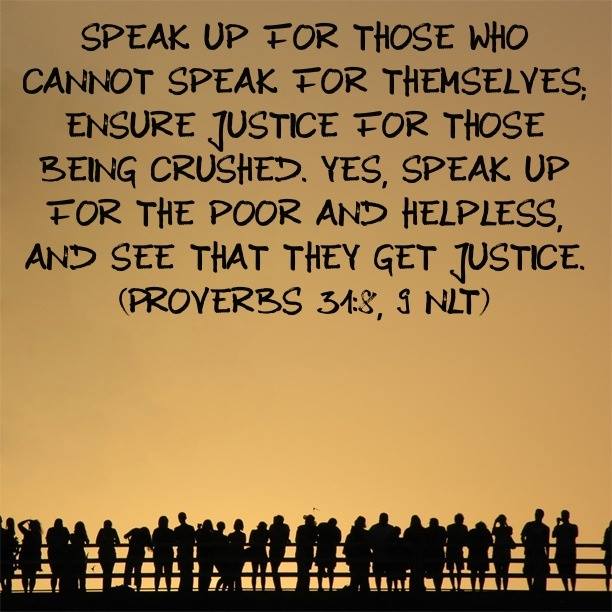
- MORE VERSES: The Bible condemns harm and abuse done to anyone in many other verses like these: Deuteronomy 12:31, Deuteronomy 18:8-10, Proverbs 31:8-9, Isaiah 1:17, Isaiah 40:10-11, Jeremiah 7:30-31, Matthew 18:6-10, Mark 10:13-14, James 1:27, etc.
Not only that, Jesus in Matthew 24 called people who claim to be religious while harming others sons of hell. The original meaning of the 3rd commandment forbidding taking God’s name in vain, actually means that it is a sin to claim you believe in God and harm others. Jews believe that this is very worst sin possible to commit as Dennis Prager explains here:
https://www.prageru.com/video/do-not-misuse-gods-name
https://dennisprager.com/column/worst-sin
The Role of True Faith: While “false religion” like Hinduism and various ancient religions that involved child prostitution in temples and false doctrines by some “Christians that forbid marriage to priests or members or claim that people can be saved without repentance no matter what they do, such as anti-nomianism and once saved always saved false doctrines) can enable abuse, true biblical Christianity has historically pioneered human rights, stopped abuses of all kinds from sexual abuse to infanticide, and advocated for the vulnerable. Genuine belief in a God who sees every hidden act is the most powerful internal restraint against evil ever known.
The Real Serious Causes of Abuse: We need to identify the real and most serious causes of abuse which research shows are greed, power, media and sexualization of women and children as well as men, atheism/secularism, and things like that or else we will enable more abuse to happen.
A lot of research shows that there are sadly some Christians who have done harm to children, AGAINST God’s laws and principles, and so this can’t be attributed to God (abuse rates in churches are ~1.5-4%). But rates of abuse are far higher in many secular environments. Rates of abuse in public schools can be from 10-70%, secular and atheist states have abuse rates of 50-90%, and Hollywood has abuse rates of up to 94% (see research links below). So many research studies show that biblical Christianity actually drastically reduces and stops abuse.
2. The Global Crisis: Confronting the Statistics
Abuse is a human crisis of staggering proportions. Here are some statistics:
- Worldwide Impact: According to the World Health Organization, “it is estimated that up to 1 billion children aged 2–17 years, have experienced physical, sexual, or emotional violence or neglect in the past year (WHO Statistics). https://www.who.int/news-room/fact-sheets/detail/violence-against-children, https://www.cdc.gov/violenceprevention/childabuseandneglect/vacs/onebillion-children.html
- The U.S. Crisis: Research presented by advocates like Yolanda Schlabach indicates that between 300,000 and 800,000 children are trafficked within the United States every year.Sex Trafficking in the U.S. by Yolanda Schlabach https://www.youtube.com/watch?v=LNq2WS-QFcc
- The Worst Environments: In atheistic or secular states and some secular environments like Hollywood where there is no accountability to God, rates of abuse can reach up to 94% (see statistics below).
- North Korea: Human Rights Watch and defectors like Yeonmi Park report that sexual violence is so common it is “part of daily life,” with some reports suggesting 90% of women have faced such abuse.
- Watch Yeonmi Park, a North Korean refuge talking about some of the terrible abuses she experienced and others experience: The Horrors of the “Pleasure Squad”
- It’s impossible to quantify the pain and suffering from abuse in numbers, but the Center for Disease Control and Prevention studied the effects of harming and abuse of children, including the direct costs of medical treatment and police investigations, as well as the “intangible impacts” on victims and communities across the life course and determined that the lifetime cost of child maltreatment was $428 billion-$2 trillion every year. https://apolitical.co/solution-articles/en/child-abuse-costs-us-economy-2-trillion-every-year
That is several times more than enough to stop extreme poverty worldwide (~expert say that could be done with $200-400 billion a year) and all its evil consequences.
3. Identifying the Real Causes: Power, Media, and Sinful Systems
When someone tragically abuses another person, it’s crucial to identify the actual causes. If we misdiagnose the cause of abuse, we are perpetrating injustice and enabling more abuse to happen just the same as when corrupt policemen falsely accus an innocent person and put them in jail, while the real criminal is free to commit more crimes. While any instance of abuse is a tragedy, stopping it requires a clear-eyed understanding of its root causes. Misidentifying the source of harm allows evil to persist.
When someone is abused, who should we blame? Should we blame abuse that was done to them when they were younger? Should we blame a person’s gender, their nationality, their job, the media they watch, the music they listen to, greed, how their parents treated them, how their friends treated them, their schools, their wealth and greed, their power, their economic views, their worldview (religious, agnostic or atheist), political views, level of education, level of propaganda in society, other factors, a combination of some of these or what?
MY EXPERIENCE BRIEFLY
When I was 32, living in Korea, I fell in love with a wonderful woman who was active in the church as a youth leader, was encouraging to others, was very interesting to talk to, attractive and had other good qualities. We dated and got married and were happy for a couple years. Sadly, some business partners broke contracts with me and caused the loss of a major amount of money. At this time, I needed my wife’s support most, but she stopped almost all romance, dating, conversation, intimacy, treated me like just a money tree, used silent treatment (psychologist say this has about the same effect on the brain as physical violence), began threatening divorce frequently. She spent all her time trying to get super rich, completely neglecting me and to a large degree our daughter too. She began saying destructive things like:
“We’re married. Why do we need to date?”
“I feel happy when you are hurting.”
“Go find another girlfriend. I don’t want to be intimate.”
“95% of happiness in life is being rich.”
“Our daughter doesn’t need me anymore now that she’s a teenager. I can spend all my time making money.”
Needless to say, I was heartbroken and crushed and shocked, hearing these things. I asked her to talk with pastors and counselors, but she wouldn’t change. In the end, after being married for 15 years, she met a guy she thought was super rich, divorced me to marry him 1 month after our divorced, found out he wasn’t rich, argued a lot and divorced him as well after 1 year of marriage.
But I thought, if I want to reduce this happening to others in the future, I need to identify what is the real cause of this.
WHO SHOULD I BLAME?
It’s crucial to figure out the truth of what really causes abuse in order to prevent future abuse and also to help people recover from abuse that did happen best. If people blame the wrong causes, it can let the real cause escape, they will falsely blame innocent factors, and it could cause them to make even more serious mistakes, or even descend into abuse themselves.
Can I blame the abuse I experienced on my ex-wife being a woman or Korean or her job? No. Nothing intrinsic to being a woman, a teacher or Korean has any causal mechanism that advocates or incites abuse. Her level of education doesn’t have any influence on this.
Can I blame it on her religious views? No, I reasoned, it couldn’t be God or Christianity, because I know these actions violate God’s principles and my godly mother treated my dad very well and never did these things, as did many other godly women I knew. In addition, she was not Christian for ~1/2 of her life before we started dating.
The Bible repeatedly condemns injustice and abuse of all kinds, whether it is towards children or adults, natives within a country, or foreigners (see verses above). God is love as the Bible constantly says (1 John 4:8) and has put over 3,000 verses in the Bible condemning all the major forms and causes of abuse and injustice. It is for this reason that Jews and Christians pioneered almost all the major human rights advances in history, as many scholars have shown. The book of Job clearly shows that Satan and his agents cause evil.
God does not cause the evil that happened to it and repeatedly condemns all forms of evil. He especially condemns child abuse saying that any who do this evil should be drowned in the sea (Matthew 18:6) and that we should be especially careful how we treat children (Matthew 18:10). He was revolted at the evils of child sacrifice (Jeremiah 7:30-32, 19:3-5), tells godly people to speak out against injustice of all kinds (Proverbs 31:8–9) and that we are to defend the weak and helpless (Psalm 82:3–4). So I cannot blame God, the Bible or SDA church for that. There had to be other causes.
She wasn’t born with these traits any more than other people are, so that’s not it. There had to be other causes.
But what did cause the abuse I experienced, that you have experienced and that many experience?
WHAT WERE THE REAL CAUSES OF ABUSE?
I have degrees in religion and psychology and these helped me identify the real causes that influenced her to be abusive:
- 1) GREED: The Bible says greed is the root of all evil (1 Tim. 6:10). This applied in several ways in this case:
First, I found out that her father had been an alcoholic and when drunk had often been abusive in several ways to his wife and his daughter (my wife). Why do alcohol corporations sell that poison? To make profit, regardless of who it hurts, AKA greed.
Greed also was a factor in several other areas below. - 2) PSYCHOLOGY/PREVIOUS ABUSE: I realized that the hurtful words and actions did not come just from her. Of course they come from Satan originally. But I was sure they meant she had been abused and also deceived by media. Over time, I found out this was true. She had been severely abused by her father. So she never had a healthy family growing up and didn’t know how to live in that way.
Many psychologists share that people who are hurt, esp. when younger, often grow up to hurt other people. They also often develop addictions of some type. It may be gambling, food, money, power, sex or other things. But because they are insecure, they feel a need for some addiction to fill that empty place and this often hurts other people as well. - 3) MEDIA/PROPAGANDA: Professors at Harvard and other elite universities say that propaganda and lies in media are extremely sophisticated now. They say that if we compare propaganda in media now to the Nazi time, it’s like a smart bomb to a BB gun. Many people have gone through a lot of pain because of this. They like my ex-wife don’t know how to distinguish truth from deception in media,
- 4) MEDIA/GREED: A top propaganda of media corporations is promoting the concept of “Gain wealth. Forget all but self” and this is very destructive to relationships as Dr. Noam Chomsky has said. The Bible says that greed and focusing only on self will bring terrible times in the last days (2 Timothy 3:1-5).
- 5) MEDIA/FEELINGS: Media often says to follow your feelings, that they are who you really are, that to be authentic, you should follow your feelings. God says some feelings are good and He wants to give us the desires of our heart, but that the heart is deceitful above all things and that our feelings should be tested like everything else. My wife often said that to authentic, she had to follow her feelings and that included the choice to be abusive in many ways to me and our daughter, which was extremely painful.
- 6) MEDIA/VIOLENCE/GREED: Media corporations often portray violence as a way to solve problems. Why? It gets viewers which is more profitable and it also can be a factor that breaks up families. My ex-wife’s father was violent to her and she was violent to me at times (it didn’t hurt, but the idea that my wife was trying to hurt the man she promised to love was very painful). And after divorce, people need to buy/rent 2 homes, 2 cars, 2 of almost everything, which is very profitable for corporations.
Basically, because of greed, media lies and propaganda, she was manipulated to put greed and self first. This caused much tragedy just as the Bible says “Greed brings grief to the whole family” Prov. 15:27 NLT
Ironically, we could have made a lot more money if she had put love first instead of greed. Her frequent threats to me, made me unable to sleep for 10000s of nights and I couldn’t focus on work very well. So I learned that truth…and having the right priorities, knowing the truth…is VERY important.
This experience was painful, but I don’t blame her much for the pain she caused. Why? When Jesus was being crucified, He asked God to forgive those who hurt Him, because they didn’t know what they were doing. They were deceived/brainwashed. And the had a long background in religion and should have known better. My wife had not grown up Christian and had only been a Christian for a few years before we got married. So I just pray that God forgives her and understands she was brainwashed.
Now I am focusing a lot on research to help people understand how to make better decisions and avoid propaganda and other lies so they have better lives, more successful, healthier relationships, etc. I am working on many articles on this website as part of that. Hopefully it will help many people avoid the hurt that I experienced.
To stop abuse, we need to look at some of the psychological and systemic drivers. These are some of the biggest ones:
MAJOR FACTORS THAT CAUSE ABUSE
Previous Abuse
Do hurt people go on to hurt other people? Yes, Much research shows that about 30% of individuals who experience abuse in childhood while continue the “cycle of violence” or “intergenerational transmission of abuse.” because they “learned” that violence is a normal way to resolve conflict or exert power. Thankfully about two-thirds of those abused as children don’t want others to experience what they did and do not repeat the cycle as adults.
But that just moves the question one generation back. Why did the abuser commit the abuse?
Key Research & Resources:
- “Do Abused Children Become Abusive Parents?” Office of Justice Programs, U.S. Department of Justice, www.ojp.gov/ncjrs/virtual-library/abstracts/do-abused-children-become-abusive-parents.
- Lantos, Hannah, et al. “Associations Between Childhood Maltreatment and Offending Behaviors Later in Life.” BMC Public Health, vol. 19, no. 1, 11 Nov. 2019. ScienceDaily, www.sciencedaily.com/releases/2019/11/191111204732.htm.
- “The Cycle of Abuse: When Victims Become Offenders.” PubMed, National Institutes of Health, July 2018, pubmed.ncbi.nlm.nih.gov/27436859/.
- Widom, Cathy Spatz, and Michael G. Maxfield. “An Update on the ‘Cycle of Violence.'” National Institute of Justice Research in Brief, Feb. 2001, www.ojp.gov/pdffiles1/nij/184894.pdf.
- Herrenkohl, Todd I., and Ashley N. Rousson. “IPV and the Intergenerational Transmission of Violence.” National Institute of Justice, May 2018, nij.ojp.gov/library/publications/ipv-and-intergenerational-transmission-violence.
The Corruption of Power
Psychologist Dacher Keltner explains that power literally changes the brain, causes people to lose the ability to empathize and can lead them to think they can get away with abuse because of the power they have. In an essay titled “Sex, Power and the Systems That Enable Men Like Harvey Weinstein,” psychologist Dacher Keltner explains:
“Powerful men, studies show, overestimate the sexual interest of others and erroneously believe that the women around them are more attracted to them than is actually the case. Powerful men also sexualize their work, looking for opportunities for sexual trysts and affairs, and along the way leer inappropriately, stand too close, and touch for too long on a daily basis, thus crossing the lines of decorum — and worse.
Keltner, a professor at the University of California at Berkeley, is in a position to know. For 25 years, Keltner has studied people like Weinstein, leaders who abuse their power and prey upon the vulnerable.
Key Research & Resources:
- Why do powerful men behave like Harvey Weinstein? by Dacher Keltner, professor of psychology at the University of California at Berkeley. October 17, 2017 https://www.washingtonpost.com/news/morning-mix/wp/2017/10/17/why-do-so-many-powerful-men-behave-like-harvey-weinstein-this-psychologist-has-some-theories
The Psychology of Greed: How Wealth Distorts Empathy and Fuels Abuse
What gives people power? Often it is wealth and greed. Scientific research confirms the ancient biblical warning that the love of money is the root of all evil (1 Tim. 6:10). Psychologists Paul Piff and Dacher Keltner at UC Berkeley have conducted extensive studies demonstrating that as wealth and power increase, an individual’s sense of compassion and empathy often decreases. This “empathy gap” fosters a sense of entitlement, leading those driven by greed to prioritize their own interests while disregarding the rights and dignity of others. This psychological shift is a primary driver of abuse, as it allows those in power to view subordinates not as human beings, but as tools for personal gain.
A landmark series of studies published in the Proceedings of the National Academy of Sciences (PNAS) revealed that upper-class individuals were more likely to behave unethically, lie in negotiations, and cheat to increase their chances of winning a prize. This behavior was directly mediated by their positive attitudes toward greed. Furthermore, research on “Abusive Supervision” shows that when leaders are under financial stress or driven by a “greed-first” mindset, they are significantly more likely to engage in displaced aggression, bullying their subordinates to maintain a sense of total control.
Key Research & Resources:
- TED Talk: Does Money Make You Mean? – Paul Piff
- Scientific Study: Higher Social Class Predicts Increased Unethical Behavior (PNAS)
- The Power Paradox: How We Gain and Lose Influence – Dacher Keltner
- Financial Stress & Abuse: Research on Financial Stress and Abusive Supervision (Colorado State)
- Greed and Conflict: Greed as a Motive for Violence (UNI ScholarWorks)
The Sexualization of Women in Media
Dr. Jean Kilbourne’s landmark research shows how the media treats women as objects. When a person is seen as an “object” rather than a child of God, the barrier to abuse is removed.
Jean Kilbourne is a pioneering women’s rights activist and and researcher who spent decades identifying the primary causes of abuse and exposed the “toxic cultural environment” created by modern advertising. Through her landmark Killing Us Softly series and her extensive filmography, she eloquently argues that advertisements do far more than sell products; they sell a philosophy of dehumanization. By relentlessly dissecting the female body into disconnected parts and promoting an unattainable standard of artificial perfection, the media transforms human beings into objects.
Kilbourne reveals that this “thingification” is not a harmless byproduct of commerce, but a subliminal education that strips individuals of their humanity, and is a first crucial step that causes some people to exploit, harm and abuse women as tools for consumption rather than beings of intrinsic worth.
The gravity of Kilbourne’s work lies in the chilling link she establishes between this objectification and the reality of systemic abuse. She and many other psychologists have shown that turning a person into an object is the psychological for violence, as it is far easier to justify the abuse of a “thing” than a human being. This pervasive sexualization and “dismemberment” of images extends its reach to children and, increasingly, to men, distorting healthy relationships and fueling global crises of self-image, eating disorders, and addiction. Ultimately, Kilbourne’s research serves as both a profound warning and a call to consciousness, urging us to recognize these predatory patterns so that we may reclaim a society built on mutual respect and the restoration of human dignity.
- This is her site and surveys some of her work on this issue.
https://www.jeankilbourne.com/films/ - Killing us Softly & Jean Kilbourne The dangerous ways ads see women | Jean Kilbourne | TEDxLafayetteCollege
https://www.youtube.com/watch?v=Uy8yLaoWybk - Killing Us Softly by Jean Kilbourne: How Advertising Shaped a Generation
https://www.youtube.com/watch?v=-PLJt9tkre0 - Killing Us Softly 4 (2010)
https://www.youtube.com/watch?v=lxYcaFzVX08 - [FULL PROGRAM] KILLING US SOFTLY: THEN & NOW
https://www.youtube.com/watch?v=MQ3ESVKighs - The Strength to Resist : Media’s Impact on Women and Girls
https://www.youtube.com/watch?v=RwYYHQRi5nY
Here is the summary of the factors contributing to higher abuse rates in secular and atheistic contexts, organized into bullet points for easy scannability on a webpage.
Secularism and Atheism Influence Much Higher Abuse Rates
Scientific research into the “supernatural monitoring” hypothesis shows that the belief in a watchful, morally concerned deity—sometimes referred to as a “Big God”—serves as a powerful psychological deterrent against anti-social behavior and cheating. Studies like the “Princess Alice” experiment demonstrate that even children who believe they are being watched by an invisible agent exhibit significantly higher levels of rule-following and lower levels of cheating, an effect that mirrors the behavior of adults under social surveillance. But it only works if they really believe in this supernatural being. Those who are skeptical show very little difference in morality from those who think no human or supernatural force is watching watching them. This effect is also seen in studies on university students and adults.
This mechanism is central to Ara Norenzayan’s “Big Gods” theory, which posits that religious belief facilitated the rise of large-scale human cooperation by providing a shared moral framework enforced by an omniscient observer, a constraint that atheism lacks by definition. Furthermore, scholars like Guenter Lewy and Bruce Sheiman argue that without the “moral boundaries” provided by religion, secular societies may experience a decline in social cohesion and objective moral standards. Research also indicates that theists are more likely to believe in “absolute standards of right and wrong,” whereas atheists are statistically more prone to moral relativism, which critics argue can lead to more flexible or self-interested ethical boundaries in the absence of perceived divine accountability.
Absence of Objective Moral Absolutes: In biblical frameworks, the belief that humans are created Imago Dei (in the image of God) establishes an unchangeable standard for human dignity. In secular or atheistic contexts, morality is often viewed as subjective, just an opinion that can be discarded at will, or reletavistic. This fluidity can allow individuals in power to rationalize abusive behavior based on personal desire or situational ethics.
Lack of Eternal Accountability: A central deterrent in biblical contexts is the belief in a final, divine judgment where no secret remains hidden. Atheistic environments remove this psychological barrier, leaving only the risk of being caught by human authorities. In high-power environments like Hollywood or state-run institutions, predators often believe their status makes them untouchable by the law, effectively removing any remaining restraint.
Devaluation of the Individual: Secular and atheistic states (such as North Korea) often prioritize the “State” or “System” over the individual person. When humans are viewed as biological accidents or state assets rather than sacred creations, the intrinsic value of the person is diminished, leading to systemic exploitation and the high rates of abuse (up to 90%) documented in these regions.
Influence of materialistic Darwinism and Radical Secularism: The removal of traditional biblical boundaries regarding relationships and power often leads to a “might makes right” culture. Without clear moral prohibitions, secular environments in media and sports can become breeding grounds for predatory behavior, where the pursuit of personal fulfillment is prioritized over the safety of others.
Citations for Belief in God reducing crime/abuse and higher rates of abuse in secular environments
- Bering, Jesse M., and Dominic D. P. Johnson. “Hand of God, Mind of Man: Punishment and Cognition in the Evolution of Cooperation.” Evolutionary Psychology, vol. 3, no. 1, 2005, pp. 2–32, https://doi.org/10.1177/147470490500300101.
- Lewy, Guenter. Why America Needs Religion: Secular Modernity and Its Discontents. Eerdmans, 1996.
- Norenzayan, Ara. Big Gods: How Religion Transformed Cooperation and Conflict. Princeton University Press, 2013, https://press.princeton.edu/books/hardcover/9780691151212/big-gods.
- Piazza, Jared, et al. “‘Princess Alice Is Watching You’: Children’s Belief in an Invisible Person Inhibits Cheating.” Journal of Experimental Child Psychology, vol. 109, no. 3, 2011, pp. 311-320, https://doi.org/10.1016/j.jecp.2011.02.003.
- Sheiman, Bruce. An Atheist Defends Religion: Why Humanity Is Better Off with Religion Than Without It. Alpha Books, 2009.
- Center for Disease Control. This research defines ACEs and identifies high-trust, stable environments as critical for preventing childhood trauma. “Fast Facts: Preventing Adverse Childhood Experiences.” CDC, 2024, https://www.cdc.gov/violenceprevention/aces/fastfact.html.
- United States Conference of Catholic Bishops. This research provides the baseline statistics of 4% for institutional religious abuse in Catholic churches, used to contrast with higher secular rates. “The Nature and Scope of Sexual Abuse of Minors by Catholic Priests and Deacons.” John Jay College Research, 2004, https://www.usccb.org/issues-and-action/child-and-youth-protection/upload/The-Nature-and-Scope-of-Sexual-Abuse-of-Minors-by-Catholic-Priests-and-Deacons-in-the-United-States-1950-2002.pdf.
- Shakeshaft, Charol. This research compares the significantly higher rates of abuse in secular public schools to other organizations. “Sexual Abuse of Students by Teachers and Other School Personnel.” U.S. Department of Education, 2004, https://www2.ed.gov/rschstat/research/pubs/ceasubs.html.
- Human Rights Watch. This research documents the 90% abuse rate in atheistic state sectors where religious moral restraints are absent. “You Cry at Night but Don’t Know Why: Sexual Violence Against Women in North Korea.” HRW, 1 Nov. 2018, https://www.hrw.org/report/2018/10/31/you-cry-night-dont-know-why/sexual-violence-against-women-north-korea.
- Puente, Maria, and Cara Kelly. This article reports on the 94% harassment and assault rate within the highly secular entertainment industry. “How Common is Sexual Misconduct in Hollywood?” USA Today, 20 Feb. 2018, https://www.usatoday.com/story/life/people/2018/02/20/how-common-sexual-misconduct-hollywood/1083964001/.
RESEARCH ON LEVELS OF ABUSE IN DIFFERENT ENVIRONMENTS
Many people sincerely but wrongly assume that the levels of harm are the same within the church as they are in the secular world. Misidentifying the scale and source of abuse has serious consequences; it allows the real causes to escape notice, which inevitably leads to more innocent people being harmed. Research shows that secular and atheistic environments often cause significantly higher rates of abuse than biblical contexts, partly because atheism has no moral standards, no laws against abuse of any type, and partly because atheism teaches that there is no eternal life, this life is all you have. Some atheists are ethical people (because of Christian upbringing or the Christian culture they live in), but many atheists have believed that this life is the only life they will have so thought that they have to fulfill every fantasy while they are alive, even if it hurts others. This is one major factor that leads to high levels of abuse in atheist contexts as research shows below.
Christians have pioneered more human rights advances in history than all other worldviews combined. Today, many continue that legacy, working to bring the rate of abuse down to zero. To do that, we must understand the facts.
a. Faith-Based Environments (1.5% – 4%)
While any abuse in a religious context is a grievous betrayal of biblical principles, research shows these rates are the lowest among major institutions.
- Protestant Churches: Evidence indicates that Protestant churches have levels of abuse between 1.5% and 2%. This is attributed to a higher adherence to biblical family structures and accountability.**
- Catholic Institutions: Research shows that ~4% of Catholic priests have been involved in abuse (Public Safety Canada). This higher rate is often linked to non-biblical doctrines, such as forbidding priests to marry.
b. The Sports Culture (9% – 72%)
Athletes experience alarming rates of mistreatment, often fueled by intense power dynamics.
- Sexual & Physical Abuse: Research indicates that 9% to 30% of athletes experience sexual abuse, while 11% to 21% experience physical abuse.**
- Psychological Abuse: This is the most prevalent form in sports, affecting between 38% and 72% of participants (Carleton University News). Youth sports teams have been found to return the largest results for abuse of any youth organization (USCCB Report).
c. The Fashion Industry (28% – 30%)
The fashion world is a high-risk environment due to the lack of labor protections for young models.
- Sexual Harassment: According to research by The Model Alliance, nearly 30% of models have been sexually harassed at work, and 28% reported being pressured into sexual acts to further their careers (Model Alliance Research).
d. Public Schools and General Workplace (43% – 81%)
Secular public systems show a massive increase in abuse rates compared to religious settings.
- General Workplace: Surveys show 81% of women and 43% of men have experienced sexual harassment at their workplace (NPR/Stop Street Harassment).
- Public Schools: Researcher Charol Shakeshaft found that sexual abuse of students in public schools is likely 100 times higher than abuse by priests (CBS News). Student-on-student assault is also 7 times more common than adult-on-child assault in these settings (NEA Today).
e. Atheist States and Secular Media (90% – 94%)
The highest rates of abuse are found in environments that explicitly reject God or biblical morality.
- Atheist States (North Korea): In environments with no accountability to a higher power, sexual violence becomes a tool of the state. Defectors and former officers report that 90% of the women they knew had been sexually assaulted (CNN/Human Rights Watch).
- Secular Hollywood: In a survey of 843 women in the entertainment industry—a culture often hostile to Christian values—94% reported experiencing sexual harassment or assault (USA Today).
The data is clear: abandoning a biblical worldview does not lead to freedom, but to an increase in exploitation. To reach zero abuse, we must address the root causes: the deification of power, the greed of economic systems, and the rejection of the moral boundaries set by God.
Every form of abuse is an affront to human dignity. By identifying these systemic failures—whether in the media, secular states, or distorted religious doctrines—we can more effectively fight to protect the innocent and end the cycle of pain.
5. Hope and Recovery: Beauty for Ashes
God specializes in bringing good out of what was intended for evil (Romans 8:28) as he did in the life of Joseph who was abused and sold as a slave by his own brothers, was abused in prison, but then became prime minister of Egypt and saved many lives, including his own family. There are many stories of God doing this in the Bible and in real life and He can do that for you too.
Transforming Pain into Purpose
- Amanda Nguyen: After experiencing sexual assault and a broken legal system, Amanda founded Rise and drafted the Sexual Assault Survivors’ Bill of Rights, which was passed unanimously by Congress.
- Joyce Meyer: A survivor of over 200 instances of rape by her father, Joyce used her trauma to build a ministry that helps millions. She teaches that while the abuse wasn’t your fault, your recovery is your responsibility.
Again, abuse may have been a chapter in your story, but it is not the end. As you navigate this journey, remember that God knows your name and has a plan for your restoration.
Watch: He Knows My Name – Francesca Battistelli
Foundational Principles for Healing
| Principle | Action |
| Establish Safety | Share your experiences and speak your truth in a safe, non-judgmental environment. |
| Separating Identity | Realize abuse is what was done to you, not who you are. |
| Correcting Lies | Use Scripture to replace “wrong thinking” (feeling worthless) with God’s truth. |
| Active Surrender | Hand the burden to God while taking active steps toward health. |
| Strategic Forgiveness | Release bitterness for your own sake, but understand that forgiveness does not mean staying in a dangerous situation. |
Resources for Recovery
Christians have historically pioneered human rights, and that legacy continues today with the goal of reducing abuse in all environments to zero. If you or someone you love is suffering, you do not have to walk alone.
Low-Cost & Free Christian Resources
- ENDITNOW® is a global initiative to raise awareness and advocate for the end of violence around the world. It aims to mobilize Seventh-day Adventists around the world and invites other community groups to join in to resolve this worldwide issue and has resources to help people do this.
- Hope Recovery: Offers free virtual support groups specifically for survivors of sexual trauma.
- Celebrate Recovery: A worldwide, church-based program with specific tracks for sexual abuse recovery.
- The Trauma Healing Institute: Provides small-group resources to help people process deep wounds through the Bible and mental health principles.
- American Association of Christian Counselors: A database to find professional counselors who share a biblical worldview.
FIND A COUNSELOR
- 1) SDA COUNSELORS: https://www.nadfamily.org/resources/counselors
MINDCARE: MindCare is a counseling center in the Chattanooga/North Georgia area that helps with counseling and childhood trauma. They say “Why should you live your life with mental agony due to pain caused by others. It was not your fault. You now have a voice. Discover how you can manage to survive your trauma. Give yourself permission to overcome years of pain. 90% OF OUR CLIENTS FIND SUCCESS IN OVERCOMING CHILDHOOD TRAUMA EXPERIENCES.” https://www.mindcare.us - 2) Christian counselors: https://www.christiancounselordirectory.com
- 3) General Counselors: https://www.betterhelp.com/get-started
Recommended Reading
- Beauty for Ashes by Joyce Meyer
- Suffering and the Heart of God by Diane Langberg
- The Body Keeps the Score by Bessel van der Kolk (The “Gold Standard” for understanding trauma)